
Frequently Asked Questions (FAQ)
General / Getting Started
You can get in touch with our team by filling out the contact form at the bottom of the page. Once we receive your enquiry, we’ll review your requirements and get back to you to discuss the next steps.
Pricing depends on the scope of work, location and required methods. Submit your requirements using the contact form at the bottom of the page and we will provide a tailored quote.
Turnaround time varies depending on the scope of work. We aim to deliver results quickly and will confirm timeframes based on your requirements.
Yes, we understand that some projects require urgent support. Contact our team and we’ll do our best to accommodate short-notice requests where possible.
Industrial assets should be inspected periodically to maintain reliability and prevent unplanned shutdowns. Inspection frequency depends on the asset type, operating conditions and applicable standards. We can help determine a suitable inspection schedule based on your requirements.
Yes, our clients can view the digital reports prepared by certified technicians via our system ARIANA.
NDT Methods
Non-destructive testing (NDT) is a way to inspect and assess materials, components, or structures without damaging them. Different techniques are used depending on the material, size, and where the asset is located.
ARI offers a comprehensive suite of NDT services including radiographic testing (RT), ultrasonic testing (UT) phased array ultrasonic testing (PAUT), time-of-flight diffraction (TOFD), magnetic particle inspection (MPI/MT), dye penetrant inspection (DPI/PT), eddy current testing (ECT), and visual inspection (VT). You can view our full range of services on this page.
Our technicians are certified to AS/NZS ISO 9712 standards and deploy the right method or combination of methods for your specific asset, material, and defect type. ARI holds NATA accreditation to both ISO/IEC 17025 and ISO/IEC 17020, providing independent assurance of the technical competence of our inspection and testing activities.
Radiographic testing uses X-rays or gamma rays, commonly Iridium-192 or Selenium-75, to create an image of the internal structure of a component. It is particularly effective for detecting volumetric discontinuities such as porosity, slag inclusions, lack of fusion, and cracks in welds and castings.
RT is widely specified in weld inspection for pressure piping, pressure vessels, and structural steelwork. ARI holds the necessary radiation licenses and safety management plans to conduct RT safely in both workshop and field environments across Australia.
PAUT uses an array of ultrasonic elements that can be electronically steered and focused to sweep multiple angles simultaneously, producing detailed cross-sectional images of weld and material integrity. Compared to conventional RT, PAUT presents no radiation hazard, delivers faster scan times, provides real-time digital imaging, and offers superior sensitivity to planar defects such as lack of fusion and cracks.
It is the preferred method on many new-build and in-service inspection programs in oil and gas and power generation. ARI routinely uses PAUT as a standalone method or paired with TOFD for full volumetric coverage.
TOFD is an advanced ultrasonic technique that detects and sizes defects by measuring the time of flight of diffracted ultrasonic signals from defect tips. It provides highly accurate through-wall defect sizing, making it ideal for fitness-for-service assessments, pressure vessel inspection, and monitoring known defects over time.
TOFD is often combined with PAUT to achieve comprehensive volumetric weld examination as required by codes such as AS 3788, ASME V, and ISO 10863.
Weld Inspection
ARI provides full-lifecycle weld inspection from pre-weld checks including fit-up, material verification, and WPS review, through in-process monitoring to post-weld examination using RT, PAUT, TOFD, MPI/MT, and DPI/PT. We inspect butt welds, fillet welds, nozzle welds, structural connections, and pipeline girth welds.
Our services support both new construction QA/QC and in-service integrity programs in compliance with applicable Australian Standards and international codes. As a NATA accredited inspection body under ISO/IEC 17020, ARI’s weld inspection findings carry the independent technical credibility required by major project owners and regulators.
The primary Australian Standards governing weld inspection include AS/NZS 1554 for structural steel welding, AS 4041 for pressure piping, AS 1210 for pressure vessels, AS 3788 for in-service inspection of pressure equipment, and AS 2885 for pipelines carrying gas and liquid petroleum.
ARI inspectors are equally familiar with ASME, AWS, API, and ISO codes frequently referenced by multinational clients and asset owners across oil and gas, mining, and defence sectors. Our NATA accreditation to ISO/IEC 17025 and ISO/IEC 17020 ensures our testing and inspection results are technically defensible under any of these frameworks.
Yes. ARI is experienced in mobilising to remote and regional sites across Western Australia and nationally. Our teams are self-sufficient with portable RT, PAUT, and TOFD equipment, site-safe radiation management procedures, and the logistical experience to work alongside construction crews on pipeline projects in the Pilbara, Kimberley, and other remote regions.
With permanent offices in Bunbury, Perth, and Port Hedland in Western Australia, as well as in Adelaide and Melbourne, ARI is well positioned to mobilise quickly to project sites across the country. We hold all required radiation licenses and OH&S management systems and can meet FIFO or site-based roster requirements.
NDT can detect a wide range of weld discontinuities including porosity, slag inclusions, lack of fusion, lack of penetration, undercut, hot and cold cracks, hydrogen-induced cracking, burn-through, and lamellar tearing. The selection of NDT method determines which defect types can be reliably detected and characterised.
Volumetric methods such as RT and UT are used for internal defects while surface methods such as MPI/MT and DPI/PT are applied to surface-breaking discontinuities. ARI technicians select the optimal approach based on weld geometry, material, and the acceptance criteria specified by the applicable code or standard.
Pressure Vessels and Tanks
ARI provides comprehensive pressure vessel inspection including AS 3788 in-service inspections, internal and external visual examination, thickness measurement surveys, weld examination using RT and PAUT, nozzle and fitting integrity assessment, and fitness-for-service evaluations in accordance with API 579 and AS 3788.
We support statutory inspection programs, pre-acquisition condition surveys, shutdown inspections, and risk-based inspection planning for asset owners across oil and gas, chemical, and mining industries. Our NATA accreditation to ISO/IEC 17020 as an inspection body means our pressure vessel inspection reports are formally recognised for statutory and insurance purposes.
Inspection frequencies are governed by state and territory Work Health and Safety legislation and AS 3788. Typical statutory requirements set inspection intervals based on design registration, hazard level, and operating history, commonly every two to five years for internal inspections depending on jurisdiction and risk category.
Risk-based inspection programs can extend these intervals where justified by sound engineering assessment. ARI works with asset owners and competent persons to develop inspection programs that satisfy regulatory obligations while optimising maintenance costs and plant availability.
ARI inspects above-ground storage tanks to API 653 and associated standards, including floor scanning using magnetic flux leakage (MFL), shell weld examination, annular plate inspection, roof structure assessment, and corrosion mapping using UT thickness surveys. We also inspect bunded areas, tank foundations, and cathodic protection systems.
Our tank inspection reports provide detailed condition assessments, remaining life estimates, and prioritised repair recommendations to support maintenance planning for fuel, chemical, water, and process storage tanks across all Australian states and territories.
A fitness-for-service assessment is an engineering evaluation that determines whether a piece of equipment containing a known or suspected defect such as corrosion, cracking, or a weld discontinuity can continue to operate safely under specified conditions. FFS assessments follow the methodologies in API 579-1/ASME FFS-1 and are used to avoid unnecessary shutdowns and replacements while maintaining safety and regulatory compliance.
ARI’s inspection data forms the quantitative basis for FFS assessments conducted by our engineering partners, providing accurate defect dimensions and corrosion rates for Level 1, 2, and 3 analyses.
Industry Sectors
ARI supports upstream, midstream, and downstream oil and gas operations with pipeline girth weld inspection using RT, PAUT, and TOFD, process piping inspection, pressure vessel and heat exchanger examination, plant turnaround inspection services, and corrosion monitoring programs.
We have experience working to AS 2885, API 570, and API 510, as well as client-specific inspection and test plans. Our teams are site-safe and experienced in operating within permit-to-work systems at onshore LNG, oil refining, and gas processing facilities. ARI offices in Perth and Port Hedland provide ready access to Western Australia’s major oil and gas corridors.
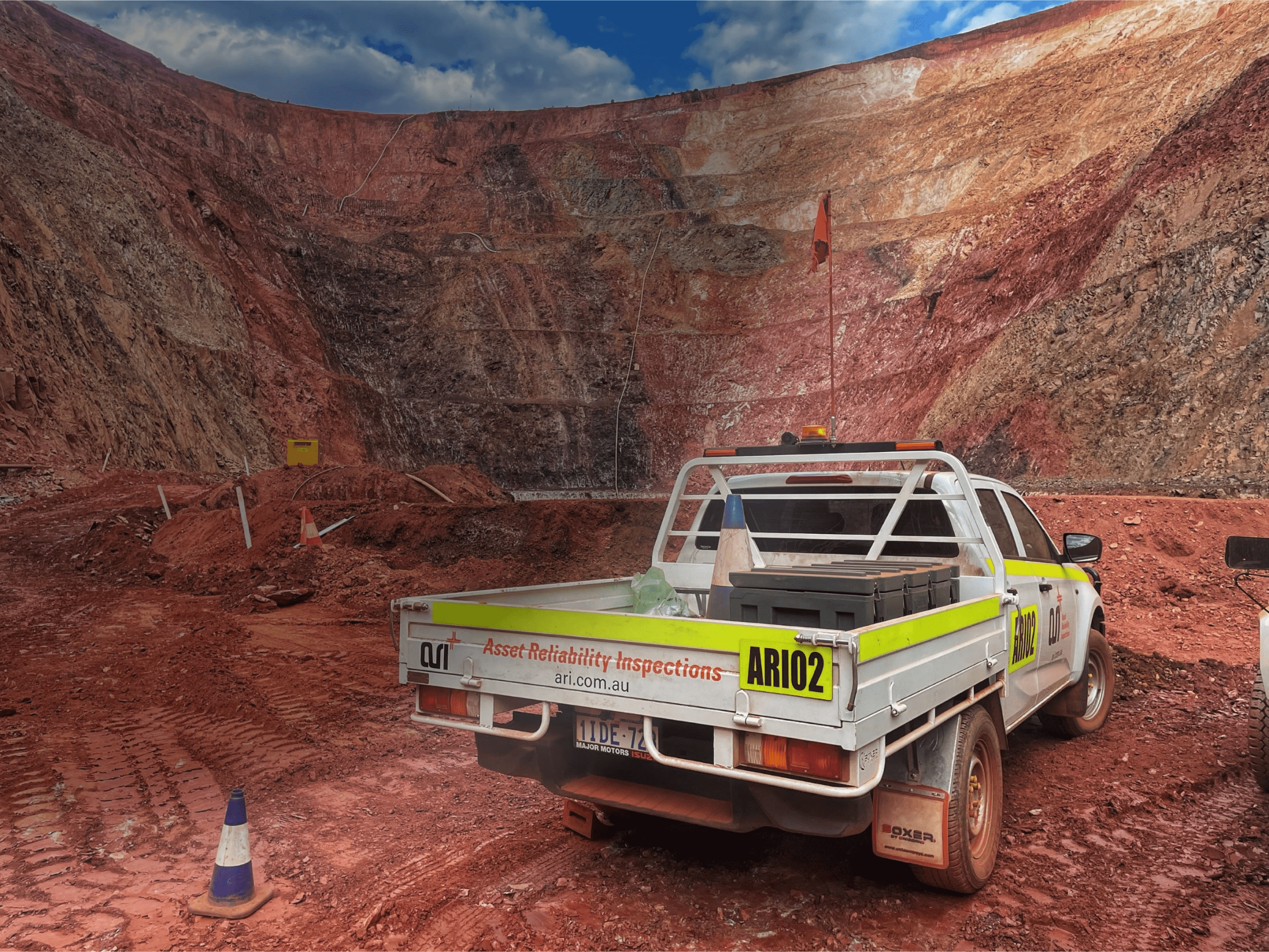
The mining and resources sector relies on ARI for structural steel weld inspection on conveyor structures, plant and equipment fabrication, pressure vessels and separators, slurry pipelines, and critical lifting equipment. We understand the demands of remote mine sites, tight shutdown windows, and the need for rapid reporting to keep production on schedule.
ARI’s Port Hedland office serves the Pilbara iron ore region directly, while our Perth base supports mine sites across Western Australia. Our mobile teams are equipped for FIFO deployments and are experienced with major mining clients across iron ore, gold, lithium, and base metals operations.
Yes. ARI provides NDT services supporting defence platforms and infrastructure, including structural weld inspection on vessels and vehicle components, pressure system examination, and radiographic inspection of fabricated assemblies. We understand the documentation, traceability, and quality system requirements associated with defence projects and can work within CASG and contractor quality management frameworks.
Our NATA accreditation to ISO/IEC 17025 and ISO/IEC 17020 is particularly valued in defence contexts where independent technical authority is a key procurement requirement. ARI offices in Perth, Adelaide, and Melbourne provide coverage across Australia’s principal defence industry hubs.
Power generation assets including gas turbines, boilers, heat recovery steam generators, condensers, and pressure piping require rigorous inspection programs. ARI provides boiler and pressure system inspection, HRSG tube inspection using eddy current and UT, weld examination on high-energy piping, and outage support services designed to minimise downtime.
We work to AS 3788, ASME B31.1, and owner-specified inspection procedures. Our Melbourne and Adelaide offices provide strong coverage for power generation clients in the eastern and southern states.
ARI has extensive experience in the chemical and process industries, providing inspection of reactors, columns, heat exchangers, process vessels, and associated piping systems. We understand corrosion mechanisms specific to chemical service including stress corrosion cracking, hydrogen-induced cracking, and erosion-corrosion, and we select inspection methods that target the relevant damage mechanisms.
Our reports align with API 510 and API 570 requirements and support risk-based inspection programs managed under API 580 and API 581.
For civil and industrial infrastructure including bridges, water infrastructure, marine structures, and bulk materials handling, ARI provides structural weld inspection to AS/NZS 1554, bolt and anchor inspection, corrosion assessment, and ground penetrating radar for sub-surface investigation.
We support both new construction quality assurance and in-service condition assessments for asset owners, local government, and major infrastructure contractors. With offices across five Australian cities, ARI can support infrastructure projects in all major population centres and regional areas.
Standards and Compliance
ARI’s NDT personnel are certified to AS/NZS ISO 9712, the Australian and New Zealand Standard for qualification and certification of NDT personnel, at Level 2 and Level 3 across applicable methods. Level 3 personnel provide technical authority, procedure development, and interpretation oversight for each method.
Where client or project requirements specify ASNT SNT-TC-1A or PCN certification under EN ISO 9712, we can accommodate these through our qualified personnel. All radiographers maintain current radiation use licences issued by the relevant state authority, and all technicians meet the ongoing recertification requirements of their certification body.
Yes. ARI holds NATA accreditation under both ISO/IEC 17025, the international standard for the competence of testing and calibration laboratories, and ISO/IEC 17020, the international standard for the competence of inspection bodies. These two accreditations together provide independent, government-recognised assurance that ARI’s NDT testing activities and inspection services meet the highest standards of technical competence, impartiality, and consistent operation.
ISO/IEC 17025 accreditation covers ARI’s laboratory-based and field testing activities, ensuring our measurement and testing results are traceable, reproducible, and technically sound. ISO/IEC 17020 accreditation recognises ARI as a competent inspection body, meaning our inspection reports and findings carry formal independent authority recognised by regulators, insurers, and major project owners across Australia. NATA accreditation is regularly reassessed through independent technical audits, giving our clients ongoing confidence in the quality of our work.
Radiation safety is managed in accordance with the Australian Radiation Protection and Nuclear Safety Act and applicable state radiation safety legislation. ARI holds current radiation licences for all applicable isotopes and X-ray equipment. Our radiation safety management plan covers source control, exclusion zone establishment, dosimetry monitoring, emergency procedures, and transport compliance.
All radiographers hold the required radiation use licences issued by the relevant state authority. We conduct pre-job briefings and radiation safety inductions for all personnel working in or near radiography zones, and our radiation safety practices are incorporated within our NATA accredited quality system.
ARI provides comprehensive inspection records including radiographic films or digital image files, PAUT and TOFD scan data, written inspection reports with defect maps and photographs, thickness survey data sheets, and certificates of conformance. Reports identify all indications, their location, dimensions, and assessment against the applicable acceptance criteria.
For statutory inspections, we provide the documentation required to support registration and inspection records held by asset owners and regulators. As a NATA accredited body, ARI reports issued under our accreditation scope carry the NATA logo and are formally recognised across Australian jurisdictions. Digital reports are typically delivered within agreed timeframes to support construction schedules and maintenance decisions.
Our Locations
ARI operates from five permanent office locations across Australia, enabling us to deliver responsive NDT and inspection services to clients in all major industry regions. Our offices are located in Bunbury, Perth, and Port Hedland in Western Australia, as well as Adelaide in South Australia and Melbourne in Victoria.
Our Bunbury office serves the South West of Western Australia and surrounding regions.
Our Perth office is our largest base of operations, supporting clients across the Perth metropolitan area, the South West, and acting as the primary mobilisation hub for regional and remote Western Australian projects.
Our Port Hedland office places our teams on the doorstep of the Pilbara, enabling rapid response across the region’s demanding operating environment.
Our Adelaide office supports clients across South Australia.
Our Melbourne office serves the eastern states, with strong coverage across Victoria.
From all five locations, ARI teams are equipped and experienced to mobilise nationally for major projects, shutdowns, and emergency inspections.